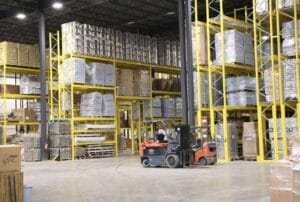
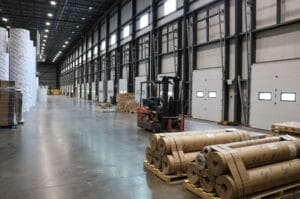
The benefits of warehousing go far beyond simple storage. It’s a smart system that helps you stay organized, cut costs, and deliver faster. Whether you’re running a small eCommerce brand or scaling a retail chain, warehousing helps you manage stock, fulfill orders, and meet customer expectations without chaos.
What Are the Benefits of Warehousing?
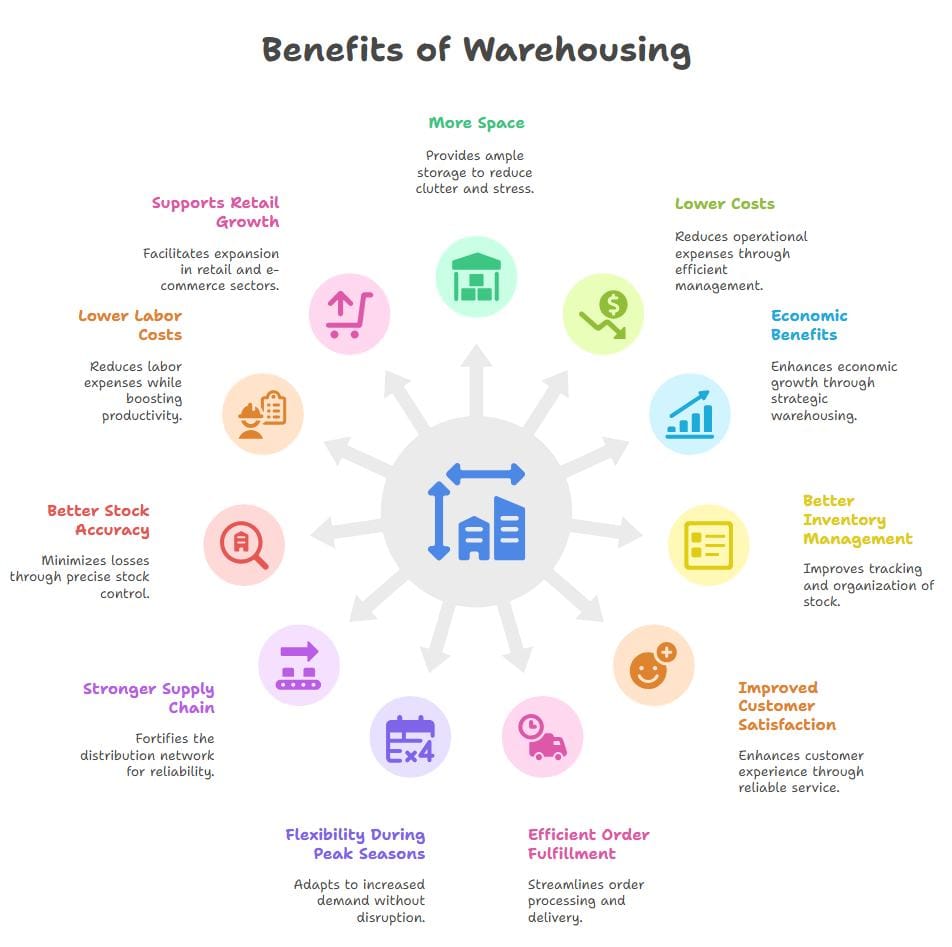
The benefits of warehousing go far beyond having extra storage space. A well-managed warehouse helps you run smoother operations, save on expenses, and scale your business with more control. From inventory tracking to faster shipping, here’s how warehousing turns into a strategic advantage for growing companies.
1. More Space, Fewer Headaches
Stock piling up in your office? Warehousing gives you the space you need to breathe and operate. Instead of crowding your main site, you store inventory off-site where it’s safe, organized, and easy to access.
This frees up your core space for:
- Sales
- Fulfillment
- Production
- Customer service
No more clutter. Just clean, focused operations.
2. Lower Operating Costs
Think warehousing is expensive? Not compared to managing your own in-house facility.
With a warehouse or third-party logistics (3PL) provider:
- You avoid the cost of building new storage space
- You reduce labor overhead
- You save on utilities and equipment
Bonus: Bulk buying becomes possible. Storing larger quantities means better supplier deals, which cuts your cost of goods.
3. The Four Economic Benefits of Warehousing
Warehousing doesn’t just help with logistics — it directly supports your bottom line. Here are the four core economic benefits:
1. Consolidation – Combine smaller shipments to save on transport costs.
2. Bulk Storage – Buy more at once, save per unit, and store what you don’t need yet.
3. Price Stability – Hold inventory when demand is low and sell when it rises.
4. Financing – Use stored goods as collateral for business loans or credit.
These benefits make warehousing a financial win — not just a logistical one.
4. Better Inventory Management
You can’t grow if you don’t know what’s in stock. Warehousing systems give you real-time inventory visibility, so you always know:
- What’s in
- What’s out
- What’s low
You can forecast better, avoid stockouts, and stop wasting money on over-ordering.
5. Improved Customer Satisfaction
Warehousing helps you deliver quickly, accurately, and consistently. That means:
- Fewer delays
- Faster returns
- Better service
When customers get their orders on time and in good shape, they come back — and tell others.
6. Efficient Order Fulfillment
Centralized inventory means faster picking, packing, and shipping. With a smart layout and good systems, warehouse staff can fulfill more orders in less time.
You can also use strategies like:
- Batch picking for similar orders
- Zone picking to divide tasks
- FIFO/FEFO to manage expiry-sensitive stock
It all adds up to smoother operations and fewer mistakes.
7. More Flexibility During Peak Seasons
Holidays? Product launches? Sudden demand spikes? Warehousing lets you flex without falling apart.
You can:
- Rent extra space short-term
- Expand stock temporarily
- Handle more orders without hurting speed
This keeps your team sane and your customers happy — even during the busiest times.
8. Stronger Supply Chain and Distribution
Modern warehouses don’t just store your products — they help move them. Many are near shipping hubs and offer value-added services like:
- Kitting
- Labeling
- Final assembly
- E-commerce fulfillment
This reduces your delivery times, transport costs, and stress.
9. Better Stock Accuracy and Fewer Losses
When stock is managed poorly, things get lost, damaged, or wasted. Warehousing fixes that by giving you systems, layout, and tools to keep everything in order.
With barcoding, scanning, and secure access:
- Products stay safe
- Staff make fewer errors
- You reduce shrinkage and write-offs
10. Lower Labor Costs and Higher Productivity
Good warehouses don’t just store stuff — they work smarter.
By outsourcing repetitive tasks like packing, shipping, or returns, your team can focus on growth.
Many 3PLs also:
- Use automation
- Schedule labor efficiently
- Monitor performance in real-time
This cuts costs and boosts throughput.
11. Supports Retail and E-Commerce Growth
Retail warehousing makes it easier to meet growing demand. Especially for mid-sized businesses, warehousing allows you to:
- Buy in bulk
- Store SKUs securely
- Ship faster
- Compete with bigger players
It also unlocks value-added services like:
- Barcode scanning
- Returns handling
- Digital inventory dashboards
You get more control — with less complexity.
Warehousing vs. In-House Storage
In-house storage gives you control — but it’s expensive and risky at scale.

For most growing businesses, warehousing is the smarter long-term move.
What Are the Benefits of Warehousing for Businesses?
Warehousing plays a crucial role in modern business operations. It’s more than just storage—effective warehousing improves logistics, cuts costs, and ensures timely delivery of products. Below are the key benefits you should know.
1. Optimized Inventory Management
Warehousing allows businesses to store and organize their inventory systematically. This organization helps avoid overstocking or stockouts, ultimately reducing operational hiccups.
2. Cost Savings Through Bulk Storage
By storing products in bulk, businesses can benefit from reduced purchase prices and lower shipping rates. It also eliminates the need to lease costly retail or office space for excess inventory.
3. Faster Order Fulfillment
Strategically located warehouses enable quicker shipping to customers. This improves delivery speed and customer satisfaction.
4. Seasonal Stock Storage
Warehousing allows companies to prepare for seasonal demand. Goods can be stored ahead of peak seasons and released as needed.
5. Better Risk Management
Warehousing protects goods from theft, damage, and loss with secure infrastructure, surveillance, and inventory tracking systems.
6. Centralized Location for Distribution
A central storage hub streamlines the supply chain. It reduces the complexity and costs of shipping products from multiple suppliers.
7. Improved Production Planning
With storage taken care of, manufacturers can focus on production schedules without being limited by storage capacity.
8. Scalability for Business Growth
Warehousing enables businesses to scale efficiently by handling increased product volume without immediate infrastructure changes.
How Warehousing Supports Business Growth
Warehousing gives businesses the flexibility to grow without needing to expand their physical premises. By storing inventory off-site, companies can maintain lean retail spaces or offices, reduce overhead, and meet rising demand efficiently. It also allows businesses to test new markets with fewer risks.
Environmental Benefits of Modern Warehousing
Eco-friendly warehousing practices are gaining momentum. From solar-powered buildings and energy-efficient lighting to centralized logistics that reduce transport emissions, modern warehouses can significantly lower a business’s environmental impact.
Common Misconceptions About Warehousing
Some businesses believe warehousing is only for large enterprises, or that outsourcing warehousing means losing control. In reality, warehousing services are scalable and customizable. Even small businesses benefit from warehousing by streamlining logistics and improving efficiency.
The Four Economic Benefits of Warehousing
Warehousing supports the economy by:
- Price Stabilization – Products can be stored and sold when market prices are favorable.
- Regular Production – Manufacturers can continue production without delays from distribution hold-ups.
- Time Utility – Warehousing ensures products are available when and where customers need them.
- Employment Generation – Warehouses create jobs for logistics, administration, and maintenance.
Benefits of a Warehousing Management System (WMS)
A Warehouse Management System (WMS) automates everything — from stock tracking to order routing.
What you get:
- Real-time inventory visibility
- Automated pick lists and shipping labels
- Reduced human errors
- Faster returns
- Live performance data and KPI tracking
WMS also integrates with your sales and shipping tools, keeping everything in sync. It’s a must-have if you want to scale with control.
Choosing the Right Warehousing System for Your Business
When selecting a warehousing system, consider:
- Type: Cloud-based, ERP-integrated, or standalone WMS
- Features: Real-time tracking, analytics, integration with eCommerce platforms
- Scalability: Can it grow with your business?
- Cost: Initial setup, monthly fees, and potential ROI
Always test the system’s usability and support quality before committing.
Read more: Distribution Center vs Warehouse: What’s the Real Difference?
Warehousing in Supply Chain Strategy
Warehousing is a backbone of the supply chain. It acts as a buffer between production and consumption, helps synchronize supply and demand, and enables businesses to reduce lead times. By integrating warehousing into overall supply chain planning, businesses can cut costs and improve customer satisfaction.
Final Thoughts
The benefits of warehousing go far beyond storage. With the right warehouse setup or 3PL partner, you gain space, speed, and scalability — all while keeping costs down.
And when powered by a good warehousing management system, it becomes a true engine for growth.
So if you’re still managing inventory from a back room or spreadsheet, it’s time to level up.
FAQs
1. What are the four economic benefits of warehousing?
Consolidation, bulk storage, price stability, and financing flexibility — all of which help you save money and scale.
2. What’s the main benefit of a WMS?
Real-time tracking and automation that improve accuracy, speed, and inventory decisions.
3. Is warehousing better than in-house storage?
Yes — especially as you grow. Warehousing offers better space use, lower labor costs, and more flexibility.
4. What are the benefits of warehousing systems in retail?
They help retailers manage stock better, buy in bulk, serve more customers, and improve delivery times.