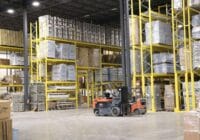
Distribution centers are the engine behind fast, reliable product delivery. They don’t just store goods — they receive, process, pack, and ship them quickly to retailers or customers. Here’s a direct breakdown of how distribution centers work and why they’re critical in the supply chain.
What Is a Distribution Center?
A distribution center is a short-term storage and processing facility that helps move goods from manufacturers to their final destination — whether that’s a retailer, warehouse, or consumer. These centers are designed for speed and volume, not long-term storage. They streamline inventory flow, reduce delivery time, and act as a critical link in the logistics chain.
How Do Distribution Centers Work?
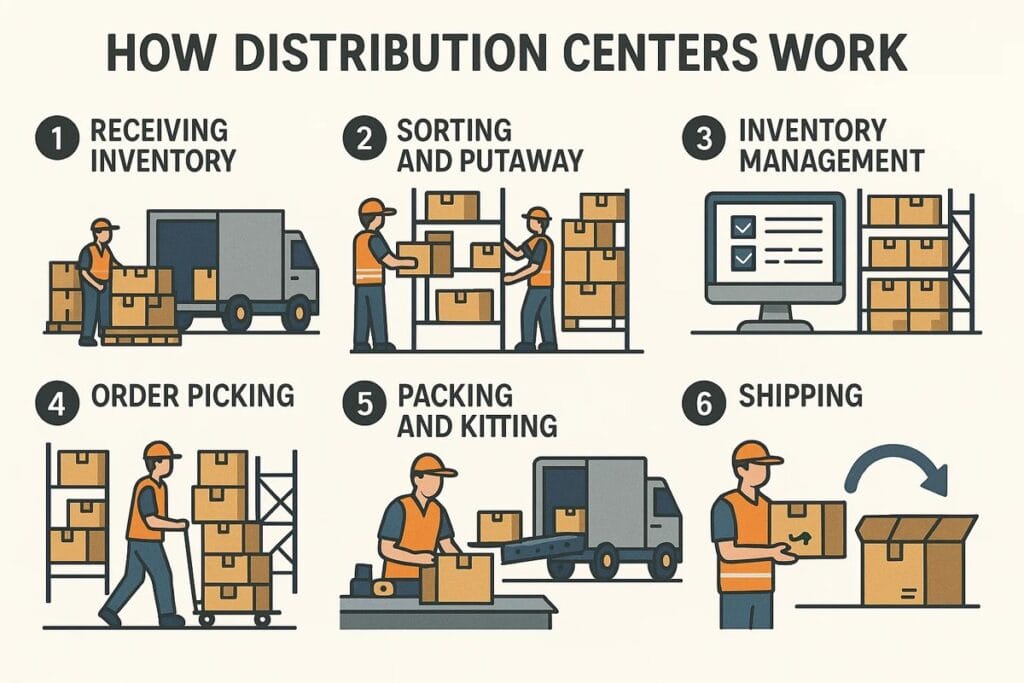
Distribution centers follow a structured process that keeps products moving efficiently through the supply chain. Each step is built to reduce delays, prevent errors, and meet customer demand on time.
1. Receiving Inventory
This is where the process starts. Products arrive at the dock from suppliers or manufacturers. Workers unload and inspect the items, check them against shipping documents, and scan them into inventory systems.
Efficient receiving helps prevent bottlenecks, ensures accuracy, and protects product quality. Large centers use forklifts, pallet jacks, and barcode scanners to speed this up.
2. Sorting and Putaway
Once received, products are sorted by type, size, or delivery urgency. Then they’re moved to the right storage zone. Popular or fast-moving items are placed closer to picking areas, while slower items go deeper into storage.
Smart putaway saves time later. It also improves order accuracy and makes picking faster when it’s time to ship.
3. Inventory Management
This step ensures the center knows exactly what’s in stock and where to find it. Barcode or RFID systems track every item in real time. Warehouse Management Systems (WMS) generate reports, flag low stock, and support accurate demand forecasting.
Good inventory control reduces errors, prevents overstock, and avoids stockouts — all critical for customer satisfaction and profitability.
4. Order Picking
When a new order comes in, workers pick the right items from the shelves. Depending on the center, they may use:
- Batch picking: Collecting items for multiple orders at once
- Zone picking: Workers pick only from assigned sections
- Automated systems: Robots or conveyors handle picking
This step must be fast and accurate. Errors here mean delays, returns, and lost trust.
5. Packing and Kitting
After picking, products are packed safely and efficiently. This includes labeling, sealing, and preparing them for shipment. If items need to be assembled into kits or custom packages, that happens here too.
Good packing reduces shipping damage and improves the customer’s unboxing experience. Some centers also include return slips or promotional materials.
6. Shipping
Orders are sent to the shipping area and sorted by destination or carrier. Trucks, vans, or couriers pick them up for delivery. Timing is key — delays here can break SLAs (Service Level Agreements) or lose customers.
Many centers use route optimization software and partner with multiple carriers to reduce cost and improve delivery speed.
7. Returns Handling
Returned goods are processed, inspected, and either restocked, repaired, or discarded. Some distribution centers manage returns internally, while others partner with 3PLs for reverse logistics.
Fast, reliable returns are now expected by customers, especially in eCommerce. Good return systems reduce loss and keep inventory clean.
Extra Services Offered by Distribution Centers
Beyond the basics, many centers offer value-added logistics services:
- Cross-docking: Products go straight from incoming to outgoing trucks without being stored
- Kitting: Items are assembled into custom packages before shipping
- Temperature-controlled zones: For food, medicine, or sensitive items
- Export prep: Proper documentation, labeling, and packaging for international shipments
These services let companies simplify operations without building their own infrastructure.
Distribution Center vs. Warehouse vs. Fulfillment Center
These terms are often used interchangeably, but they aren’t the same:
| Feature | Distribution Center | Warehouse | Fulfillment Center |
| Storage Duration | Short-term | Long-term | Short-term |
| Services Offered | Picking, packing, shipping | Storage only | Direct-to-consumer fulfillment |
| Target Recipients | Retailers, stores, B2B, 3PL | Internal or external storage | Online shoppers |
| Return Handling | Optional | Rarely | Yes |
| Order Volume | High | Low | High |
Distribution centers sit between bulk storage (warehouses) and customer-facing fulfillment.
Why Distribution Centers Matter
Without distribution centers, businesses would struggle to move goods at scale. These facilities allow you to:
- Deliver faster by reducing time from supplier to customer
- Cut costs with bulk shipping and optimized routing
- Scale easily without managing your own logistics
- Maintain accuracy by streamlining every step from storage to shipping
In short: they keep your business lean, fast, and competitive.
Trebley: A Smarter 3PL Solution
At Trebley, we help businesses handle every part of the logistics chain — from inventory storage and kitting to short-haul trucking and cross-docking. Based in Dartmouth, Nova Scotia, our 140,000 square foot facility serves clients across Canada and the U.S.
We work with startups and established brands alike, offering smart, flexible services with no long-term contracts. Our warehousing, transportation, rail, and courier services are built for businesses that want to grow without the logistics headaches.
👉 Get a quote today or learn more about how Trebley can support your distribution needs.
Final Thoughts
Now you know how distribution centers work — and why they matter. They’re not just storage units. They’re fast-moving hubs that keep supply chains efficient and customers happy.
If you’re running a business that needs to scale, meet demand, and stay flexible, partnering with the right distribution center is one of the smartest moves you can make.
FAQs About How Distribution Centers Work in Logistics
1. How do distribution centers work in the supply chain?
Distribution centers work by receiving goods from suppliers, sorting and storing them temporarily, then picking, packing, and shipping them to retailers or customers. They keep inventory moving efficiently and reduce delivery times.
2. How do distribution centers manage inventory?
Distribution centers manage inventory using barcodes, RFID tags, and warehouse management systems. These tools help track products in real time, avoid stockouts, and improve accuracy.
3. What role does a distribution center play in order fulfillment?
A distribution center handles the key steps in order fulfillment — picking products from shelves, packing them securely, and preparing them for shipping to customers or stores.
4. Do distribution centers handle returns?
Yes, most distribution centers handle returns by inspecting the items, restocking what’s usable, and processing damaged goods as needed. This is part of reverse logistics.
5. Why are distribution centers important for eCommerce?
Distribution centers are important for eCommerce because they allow fast, accurate shipping, reduce costs, and help businesses meet high customer expectations for delivery speed and reliability.